EEI event on Quality Jobs Act
19 November 2026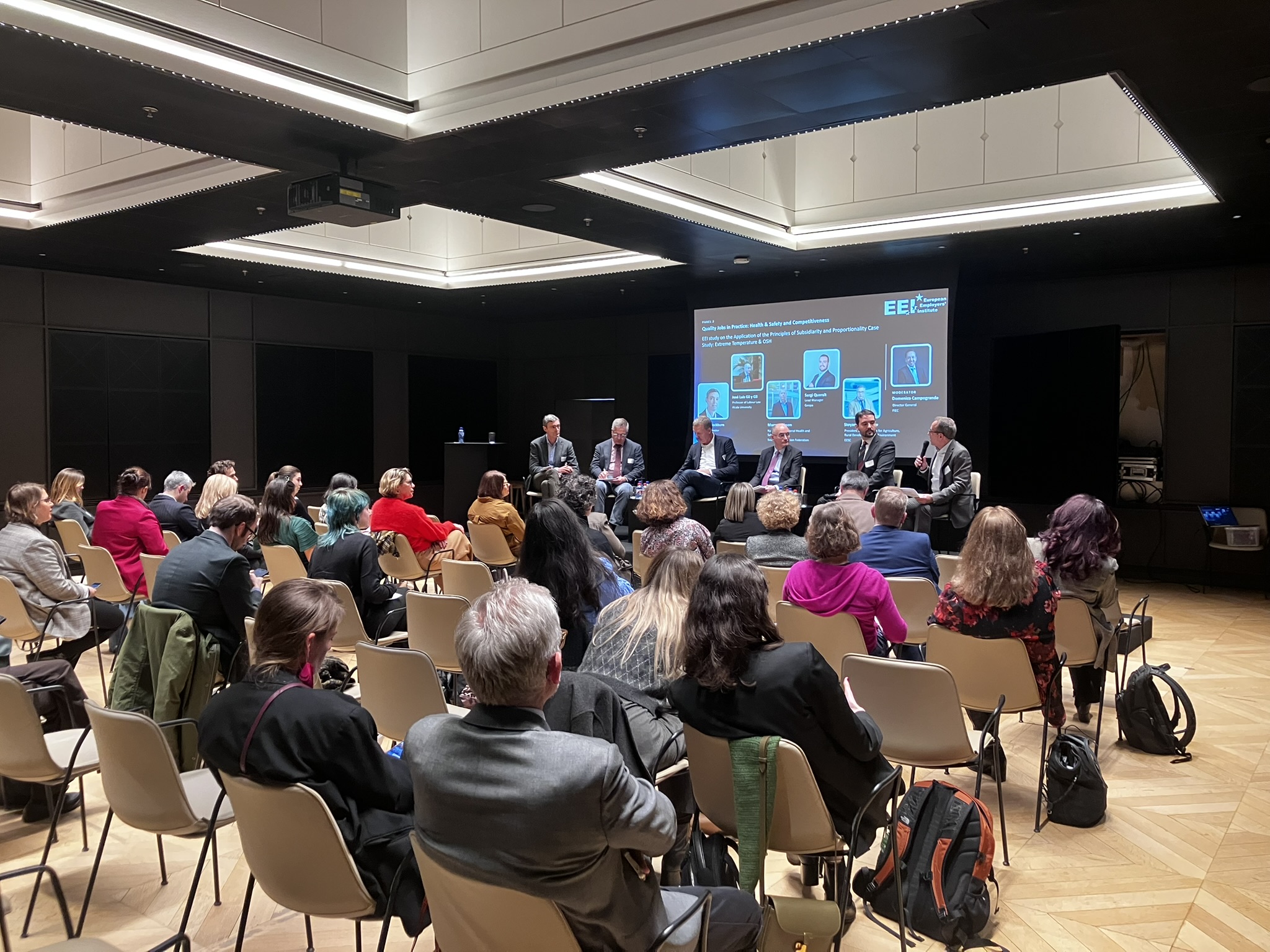
Brussels, 19 November 2026
The European Employers’ Institute (EEI) was pleased to welcome members and stakeholders to its networking event held on 19 November 2026 in Brussels. The evening brought together representatives from European and national employers’ organisations, EU institutions, and other stakeholders for an in-depth discussion on quality jobs, skills development, occupational health and safety, and European competitiveness.
The event featured presentations of two recent EEI studies examining the legal and policy frameworks governing vocational training and occupational safety and health (OSH), with particular attention to the principles of EU competence, subsidiarity, and proportionality.
Welcome and Opening
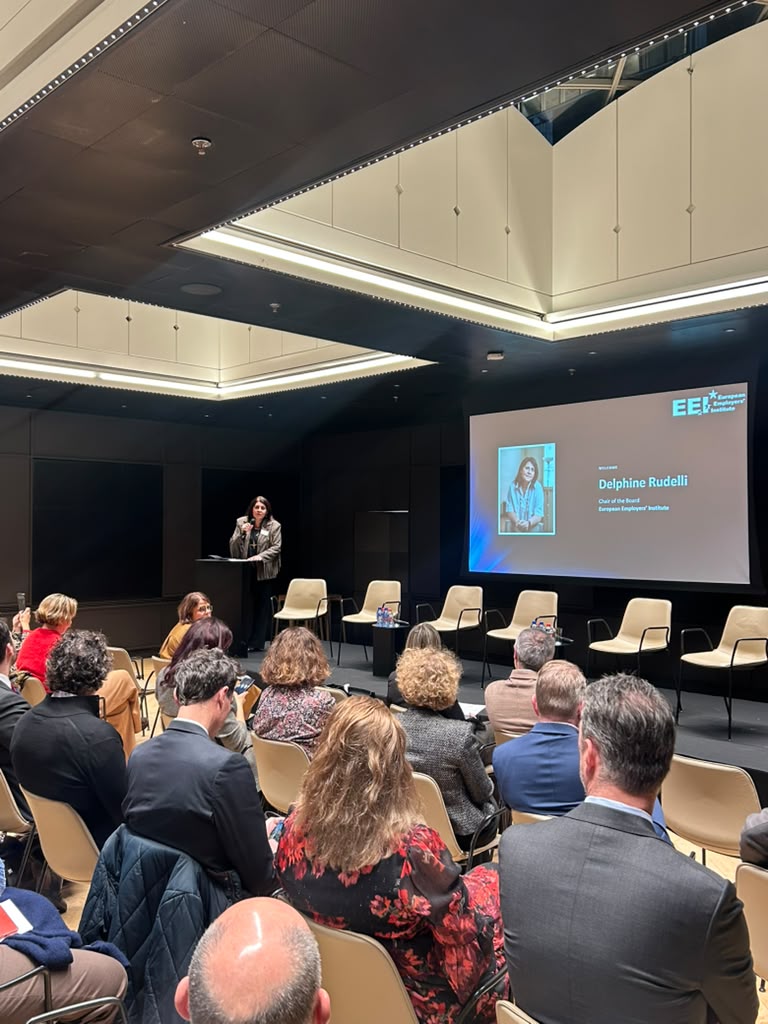
The event opened with remarks from Delphine Rudelli, Chair of the EEI Board, setting the stage for discussions on how European policies on skills and working conditions relate to competitiveness and the needs of employers and workers.
Panel 1: Quality Jobs in Practice: Skills and Competitiveness
The first panel focused on skills development and the legal framework for vocational training in the European Union.
Duarte Abrunhosa e Sousa, Professor of Labour Law at Universidade Portucalense, presented the EEI study “The Right to Training in European Union Law”, examining the constitutional limits of EU action under Article 166(4) of the Treaty on the Functioning of the European Union (TFEU).
Key findings included:
- Article 166(4) TFEU allows the EU to support and complement national vocational training policies but expressly excludes the harmonisation of Member States’ laws in this area.
- Only two EU Member States, Belgium and Portugal, establish general statutory minimum training entitlements for employees. Other countries rely on approaches including collective bargaining, training leave, individual learning accounts, and co-financing.
- Higher participation in adult learning does not necessarily depend on statutory training obligations. Sweden, Denmark, Finland, and Estonia recorded participation rates above 56% in 2024 without general statutory employer training minimums.
- European cooperation on skills remains possible through funding, Council Recommendations, policy coordination, and social dialogue, while respecting national competences.
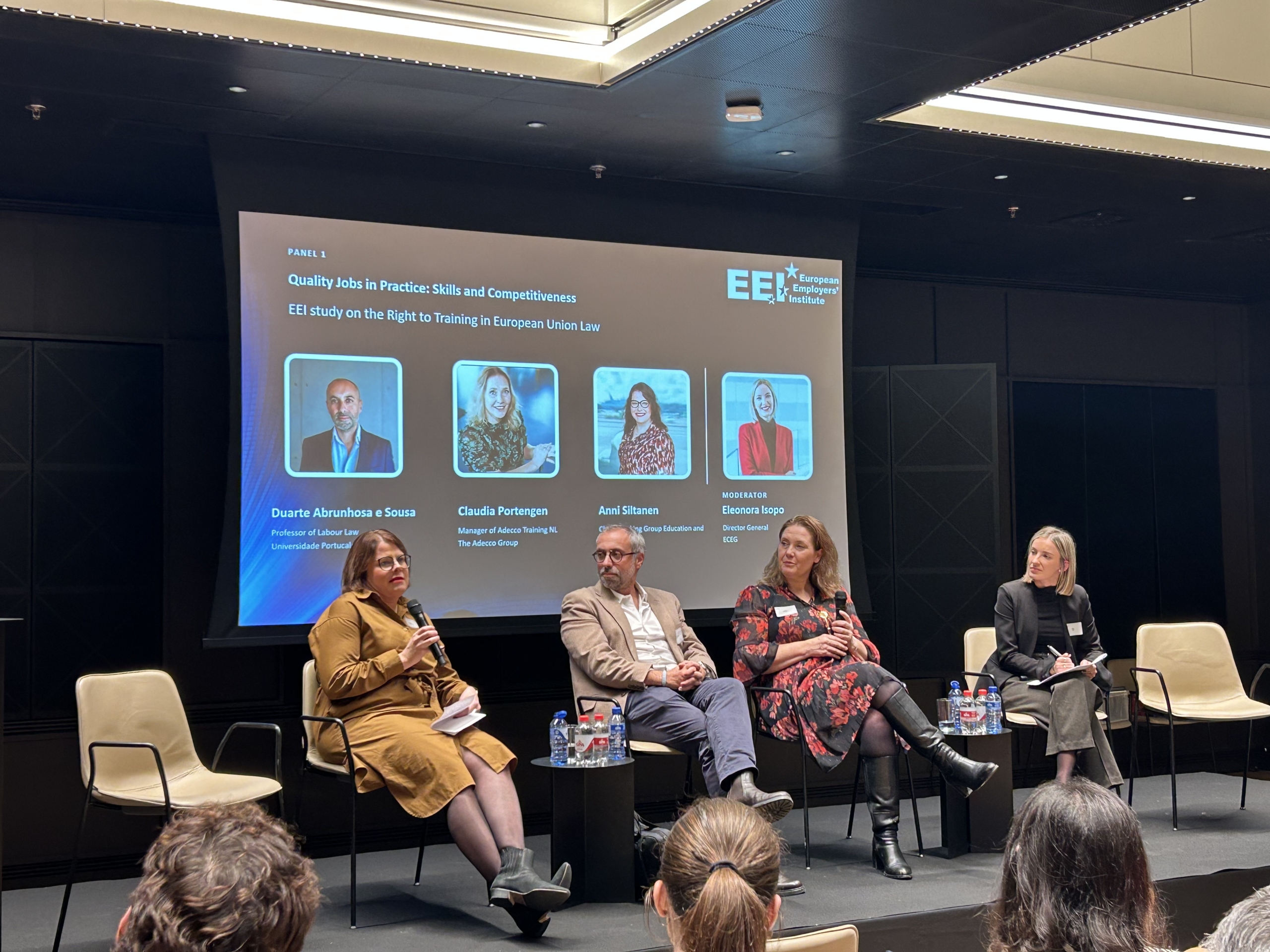
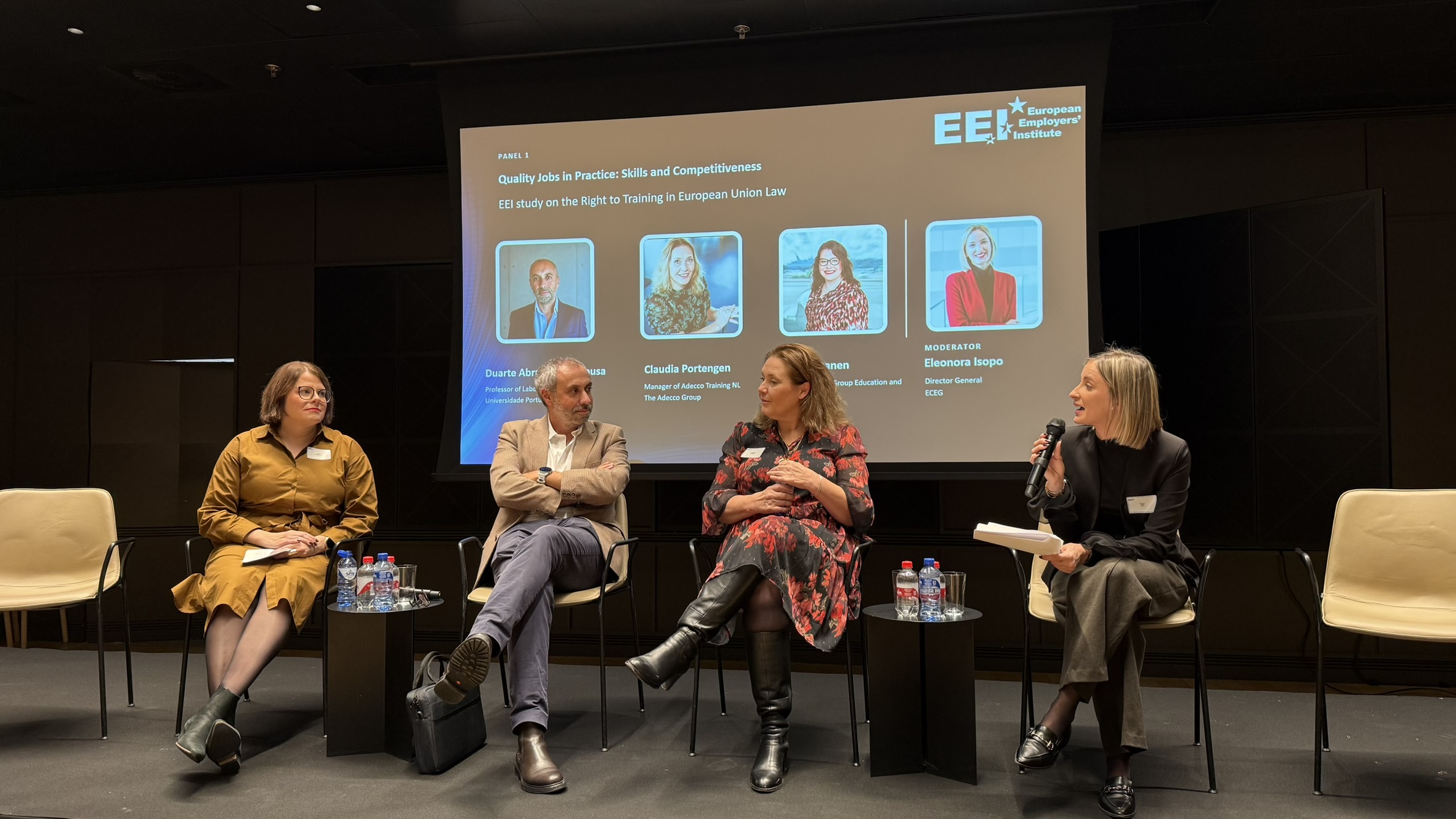
A panel moderated by Eleonora Isopo, Director General of the European Chemical Employers Group (ECEG), brought together:
- Duarte Abrunhosa e Sousa, Universidade Portucalense
- Claudia Portengen, Manager Talent & Training, Adecco Netherlands
- Anni Siltanen, Chair of the ECEG Working Group on Education and Lifelong Learning
The session explored the relationship between skills development, employers’ training responsibilities, and competitiveness, highlighting the importance of effective training systems and approaches adapted to national and sectoral circumstances.
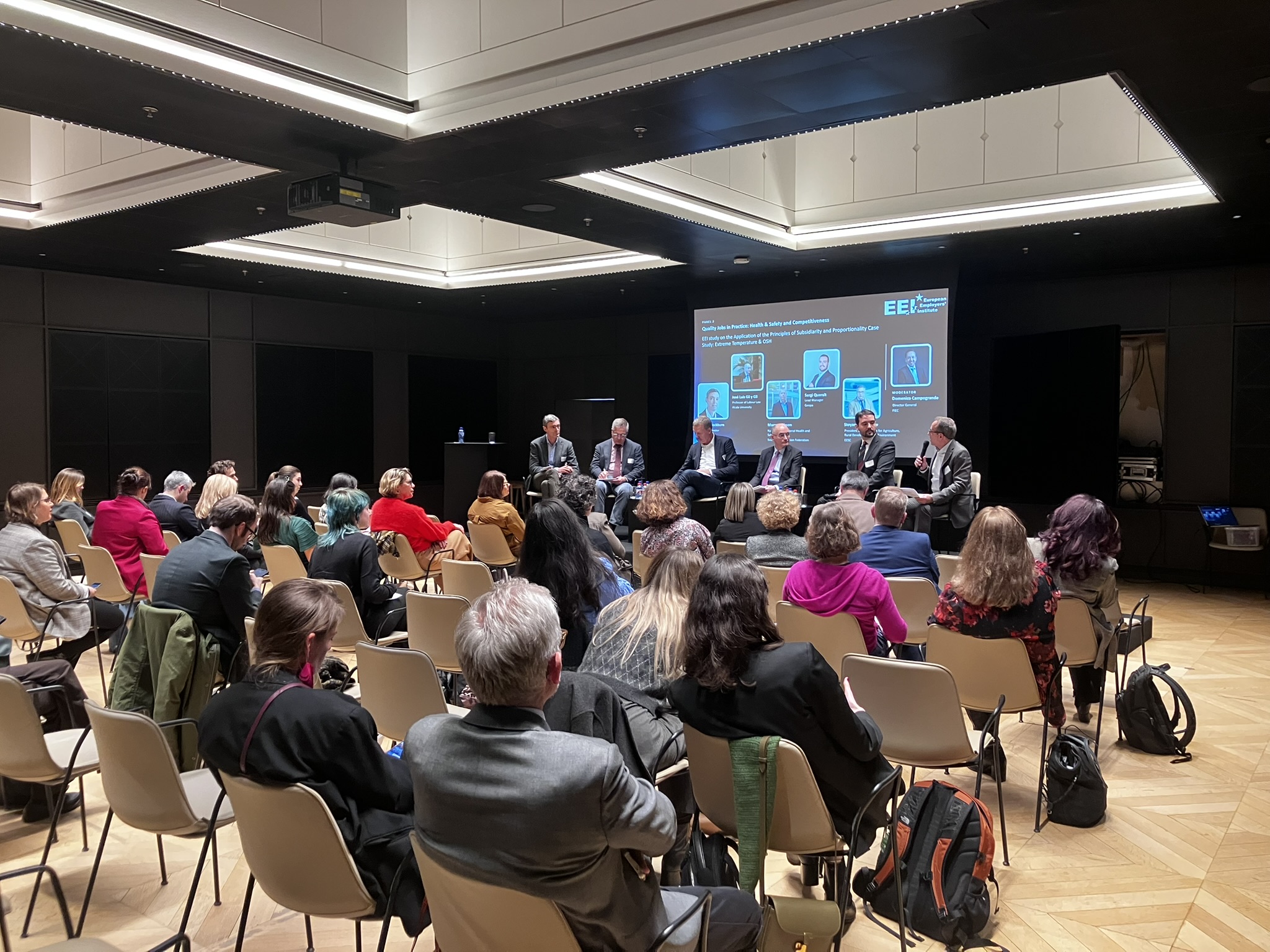
Panel 2: Quality Jobs in Practice: Health & Safety and Competitiveness
The second panel addressed occupational health and safety, focusing on the challenges posed by extreme temperatures in the workplace and the appropriate level of European regulatory intervention.
José Luis Gil y Gil, Professor of Labour Law at the University of Alcalá, presented the EEI study “The Application of the Principles of Subsidiarity and Proportionality: Case Study on Extreme Temperature and Occupational Safety and Health”, co-authored with Lourdes Mella Méndez.
Key findings included:
- Effective worker protection against extreme temperatures is essential, but the necessity of a dedicated EU directive must be assessed against existing legal frameworks.
- The EU Framework Directive 89/391/EEC, national legislation, and employers’ duty of care already provide a basis for addressing occupational risks.
- Climatic conditions, sector-specific risks, working environments, and individual exposure vary significantly across Member States, requiring flexible and targeted preventive measures.
- A uniform European directive risks either providing limited additional protection or introducing disproportionate regulatory burdens.
- Strengthening implementation and enforcement, developing technical guidance, exchanging good practices, and supporting workplace adaptation offer alternative approaches to improving worker protection.
The panel, moderated by Domenico Campogrande, Director General of the European Construction Industry Federation (FIEC), featured:
- William Cockburn, Executive Director, European Agency for Safety and Health at Work (EU-OSHA)
- José Luis Gil y Gil, University of Alcalá
- Magnus Olsson, National Occupational Health and Safety Strategist, Swedish Construction Federation
- Sergi Queralt, Lead Manager, Geopa
- Stoyan Tchoukanov, President of the Section for Agriculture, Rural Development and the Environment, European Economic and Social Committee (EESC)
The session examined the balance between effective worker protection, regulatory flexibility, and business competitiveness, with particular attention to the diversity of working conditions across European sectors and regions.
Closing Remarks and Networking Reception
The event concluded with remarks from Delphine Rudelli, Chair of the EEI Board, bringing the evening’s discussions on skills, occupational health and safety, and competitiveness to a close.
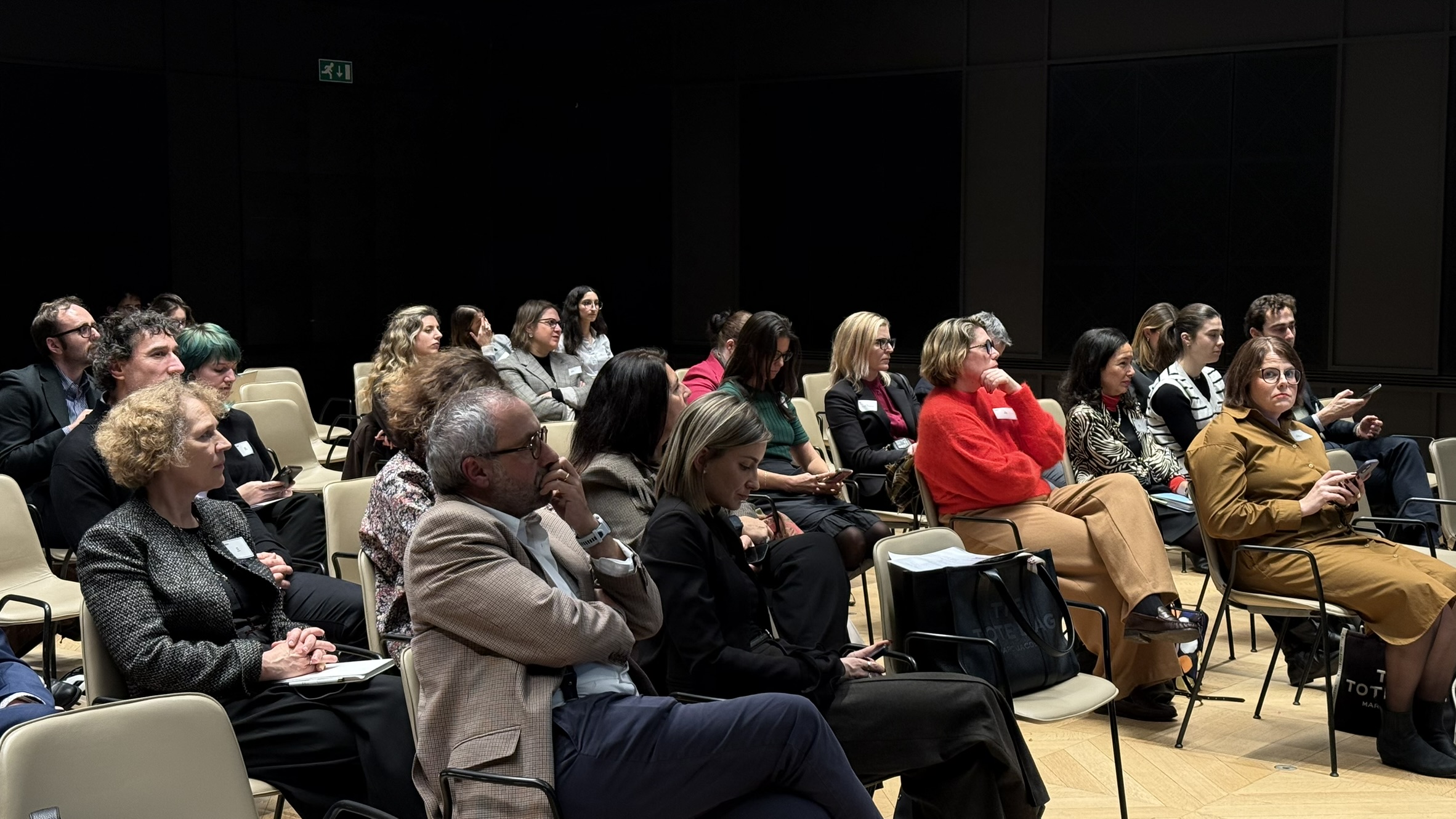
The evening continued with a networking reception, providing participants with an opportunity to exchange perspectives, strengthen professional connections, and explore future cooperation on European employment and social policy challenges.